

How to End a Speech So People Remember It


A strong ending can turn a good speech into a memorable one. Your conclusion is the final impression you leave with your audience. It should be clear, impactful, and aligned with your main message. Too many speakers rush through their closing words or trail off awkwardly, missing the chance to inspire and connect.
Why the Ending Matters
Your audience is most likely to remember two moments: the start and the end. A well-crafted conclusion:
Reinforces your key message
Leaves your audience with a clear takeaway
Creates an emotional or intellectual impact
Inspires action or reflection
Without a strong ending, your speech can feel unfinished or forgettable.
Common Mistakes in Speech Endings
Ending abruptly – Stopping without signaling closure.
Introducing new points – Confusing the audience with fresh ideas at the last second.
Trailing off – Losing energy or confidence in your final words.
Over-apologizing – Undercutting your message with phrases like “That’s it” or “Sorry if…”
How to End a Speech Effectively
1. Summarize Your Main Points
Briefly restate your core message so the audience remembers the key ideas you have covered.
Example: “Today we explored three ways to reduce workplace stress: prioritizing tasks, setting boundaries, and taking short breaks. Together, these small changes can make a big difference.”
2. End with a Call to Action
Tell your audience exactly what you want them to think, feel, or do next.
Example: “If each of you commits to practicing just one of these techniques this week, you will see an immediate improvement in your focus and energy.”
3. Use a Memorable Quote or Story
A short, relevant story or quotation can leave a lasting emotional impression.
Example: “As Nelson Mandela once said, ‘It always seems impossible until it is done.’ Let us carry that spirit into the challenges we face together.”
4. Tie Back to Your Opening
Referring to your introduction creates a satisfying sense of closure and structure.
Example: “I began today by asking, ‘What would it take to feel more confident at work?’ Now you know the steps to get there, and the choice is in your hands.”
5. Practice Your Final Lines
Your last sentence should sound confident and intentional. Rehearse it until it feels natural.
Example: Instead of ending with ‘That’s it,’ try closing with: “Thank you for your time today. I look forward to seeing the progress you will make.”
Exercises to Strengthen Your Conclusion
The Last Sentence Drill – Practice delivering just your final sentence with maximum clarity and impact.
Closing Story Practice – Choose a short, relevant story you could use as a speech ending and rehearse telling it in a way that builds toward a strong final line.
Full Speech Review – In Babli, choose your speech scenario, such as a formal graduation speech or a podcast conversation, and record your speech. Then review the content feedback with a focus on the closing section, identifying which parts land well and which could be refined to leave a stronger final impression.
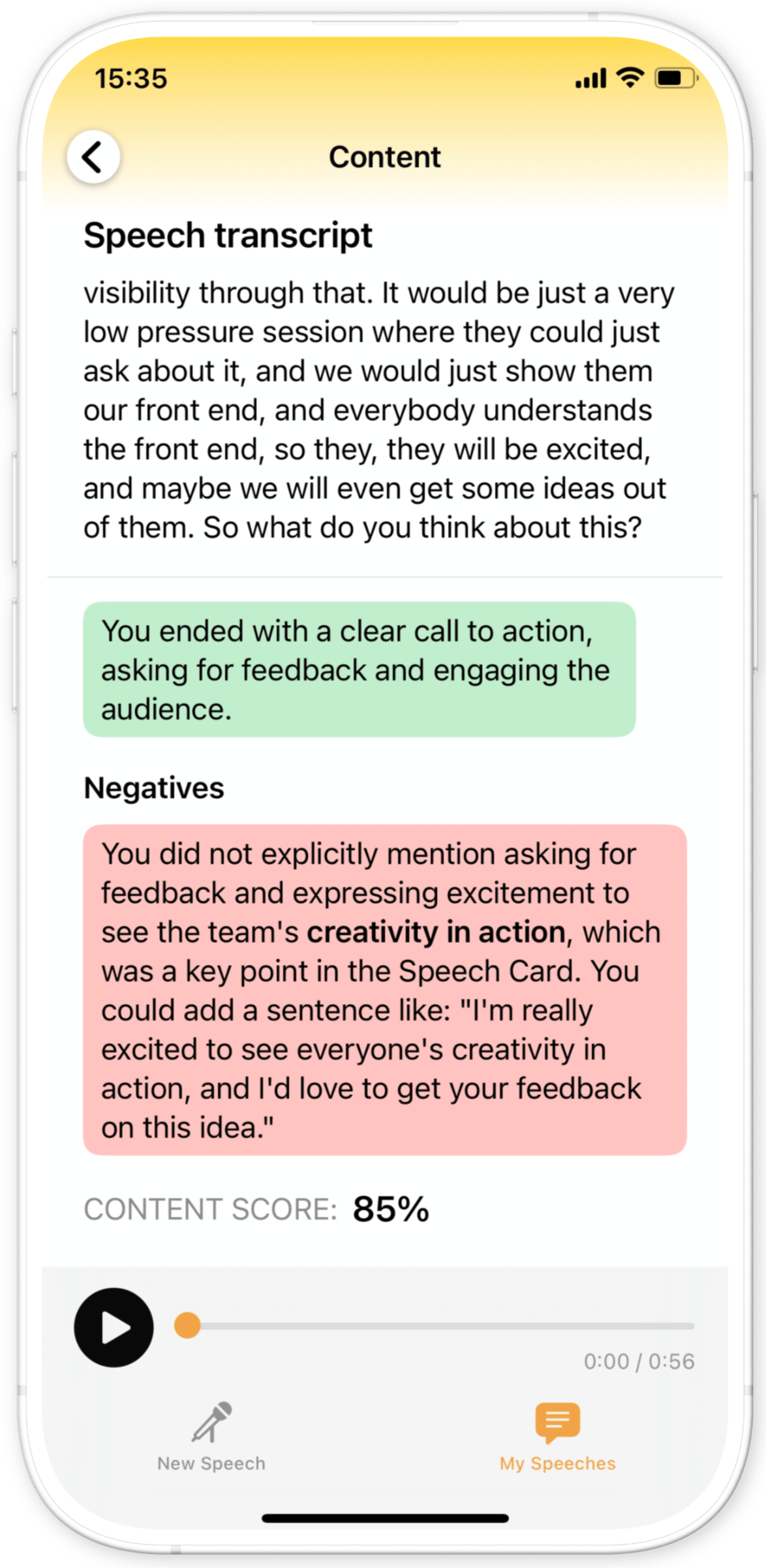
Example of speech content feedback from Babli
Key Takeaway
A strong ending is not just a formality. It is your last chance to connect with your audience and make your message stick. By crafting intentional final lines and using Babli’s speech content feedback to refine them, you can leave listeners engaged, inspired, and remembering your words long after you finish speaking.
And while endings matter, openings set the stage. For practical advice on that crucial first impression, read our guide on How to Start a Speech: 7 Powerful Openings That Work Every Time.
You should also read:

How to Start a Speech: 7 Powerful Openings That Work Every Time
The first 60 seconds of a speech decide everything. Your audience is judging whether to trust you, whether to listen closely, and whether your message is worth their time. A strong opening captures attention and sets the tone for the rest of your talk. A…
Continue reading...
How to Practice Your Wedding Speech: Tips for Every Role
A wedding speech is a rare opportunity to share personal stories, express heartfelt gratitude, and celebrate one of the most meaningful days in someone’s life. Whether you are the bride, groom, best man, maid of honor, or a parent, your words will become part of…
Continue reading...