

How to Stop Saying “Um,” “Like,” and “You Know”


Filler words like “um,” “like,” and “you know” are common in everyday conversation, but in public speaking, they can weaken your message. They often slip in without you realizing, making your speech sound less confident and distracting from your main points.
If you want to sound more polished and persuasive, reducing filler words is one of the fastest ways to improve.
Why We Use Filler Words
Many speakers rely on fillers for the same reasons:
Pausing to Think – Your brain needs a moment to find the right word, so your mouth fills the silence.
Nervous Energy – Speaking in front of people triggers anxiety, which makes you talk more to avoid awkward pauses.
Habit – You’ve been saying these words for years in casual speech, and they sneak into formal presentations.
Fear of Silence – A pause can feel uncomfortable, so you fill it with a sound instead.
The Downsides of Using Fillers
While fillers seem harmless, they have real effects on how your audience perceives you:
They make you sound less confident.
They distract listeners from your main message.
They reduce the clarity and impact of your words.
They can make you appear less prepared.
How to Reduce “Um,” “Like,” and “You Know” in Your Speech
1. Embrace Pauses
The best replacement for a filler word is silence. When you feel the urge to say “um,” stop talking and take a short pause instead. Pauses give your audience time to process your message and make you sound more confident.
Tip: Try recording yourself and noticing how long your pauses actually are. Most feel longer in the moment than they do to an audience. With practice, you will get comfortable letting silence work in your favor.
2. Slow Down Your Pace
Rushing through your points makes fillers more likely. Speaking slightly slower gives your brain time to think and your mouth less reason to fill gaps.
Tip: A slower pace not only reduces fillers but also makes your message more persuasive. If pacing is something you struggle with, see our guide on Why You Speak Too Fast (and How to Fix It). Small adjustments in speed can make your delivery sound more natural and confident.
3. Practice With a Script
Write out your speech and highlight areas where fillers usually sneak in. Rehearse those sections deliberately until you can deliver them cleanly.
Tip: Use small cues in your notes, like “...” to remind yourself where to pause, but do not stay tied to the script for too long. Once you feel comfortable, transition to speaking without notes. This forces you to think on your feet, reduces dependency on memorization, and better prepares you for real situations where you will not have a script in front of you.
4. Record and Review Yourself
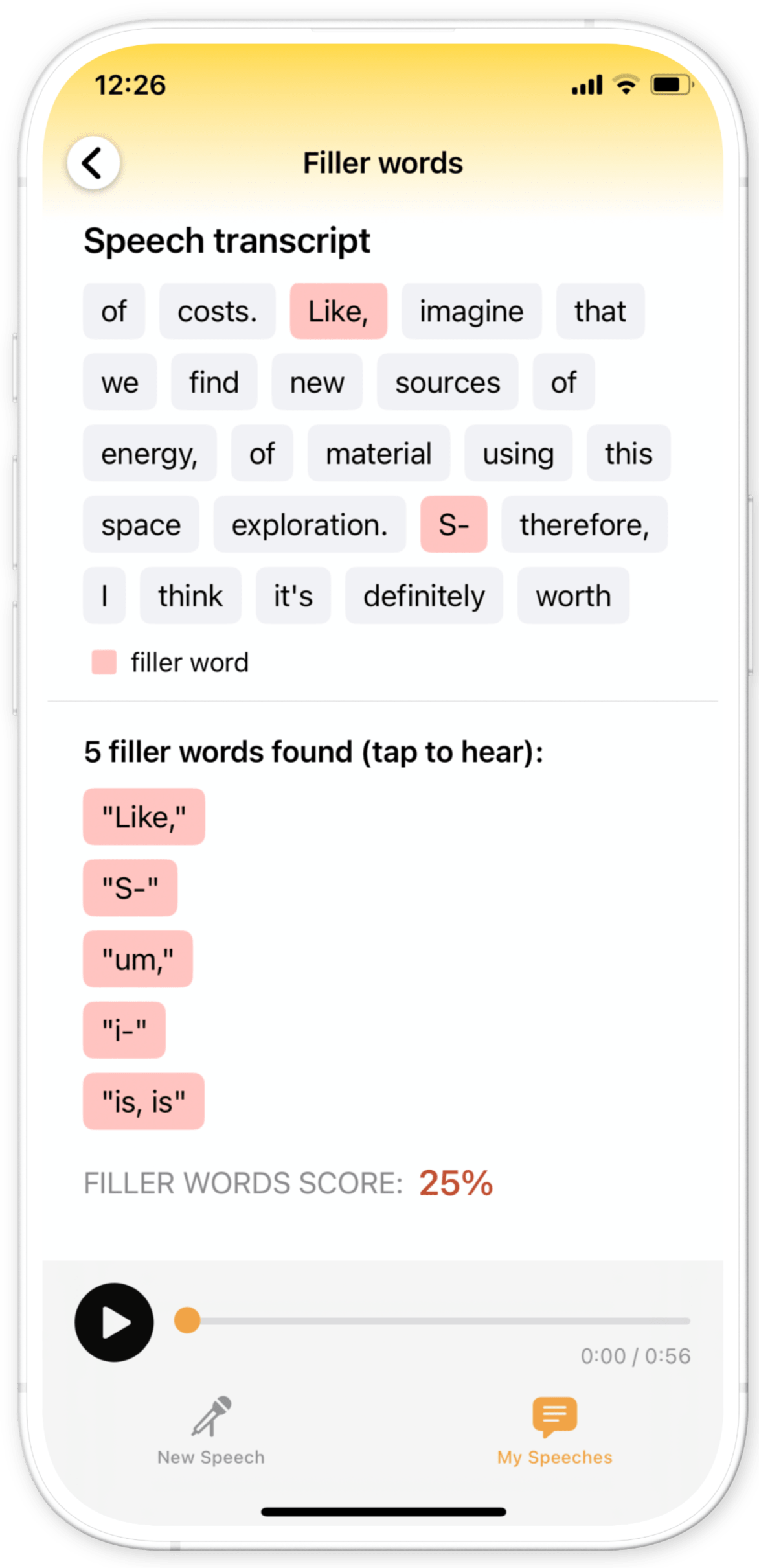
Recording your speech is the quickest way to hear just how often fillers appear. Tools like Babli make this process even more powerful by automatically detecting filler words, stutters, and repeated words in your speech transcript. You’ll see exactly where they occur, how often you use them, and get AI feedback on how to replace them with stronger delivery.
Exercises to Break the Filler Habit
The Pause Drill – Speak on a topic for one minute. Every time you want to say “um” or “like,” replace it with a pause.
The Random Word Challenge – Have a friend give you random topics to speak about for 30 seconds each without fillers.
The Babli Detection Challenge – Pick a preferred speaking scenario in any category and deliver it repeatedly. After each attempt, Babli will automatically detect how many filler words, stutters, and repeated words you used. Keep practicing until you achieve a 100% score.
Key Takeaway
Cutting filler words takes awareness and deliberate practice, but it’s one of the most effective ways to sound polished and confident. By embracing pauses, slowing your pace, and using AI-powered detection in Babli to identify fillers, stutters, and repeated words, you can replace “um,” “like,” and “you know” with clear, impactful speaking.