

How to Practice Public Speaking at Home: 5 Simple Exercises That Work

Public speaking is one of those skills that almost everyone wants to improve, but few people get the chance to practice regularly. You might have a big presentation coming up, a wedding toast to deliver, or just a desire to feel more confident when speaking in front of others. The problem is that real opportunities to practice are rare, and waiting until the big moment often leads to nerves and mistakes.
The good news is that you can train effectively without an audience. With the right strategies, your home can become the perfect practice space where you sharpen your voice, body language, and confidence. Here are five simple and effective exercises you can use at home to build stronger public speaking skills.
Why Practicing at Home Works
Practicing at home takes the pressure off. You can rehearse freely, experiment with different styles, and repeat sections as often as you like. Over time, this helps you:
Grow more comfortable with your material.
Spot habits like mumbling, filler words, or rushing.
Build confidence through repetition.
Develop flexibility by trying different tones and approaches.
Prepare for real situations instead of waiting until they arrive.
5 Simple Exercises
1. Read Out Loud Daily
Choose a book, article, or even your own notes and read them out loud. Focus on clarity, pacing, and energy. Take a paragraph and read it in different styles such as calm, enthusiastic, and persuasive. This strengthens vocal control and helps you adapt your delivery depending on your audience.
2. Practice in Front of a Mirror
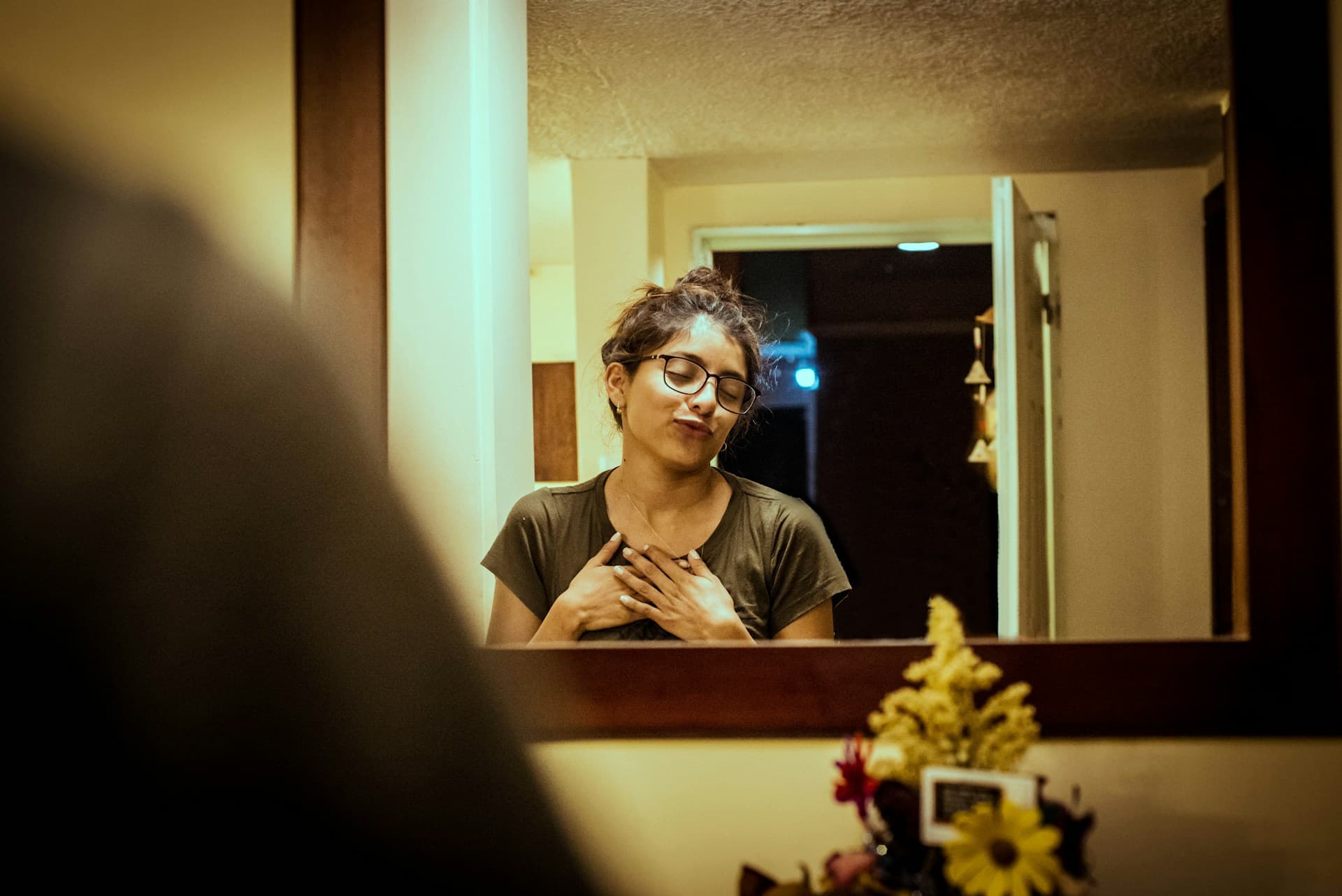
Stand tall, keep your shoulders relaxed, and look directly at your reflection as if it were your audience. Maintain steady eye contact, use natural hand movements, and monitor your posture. Practice telling a short story, such as how you met a friend or a challenge you overcame, and pay attention to how your expressions support your words. This builds awareness of both body language and presence.
3. Record Yourself
Pick a short topic, like summarizing a news article or sharing your opinion on a recent trend, and record a two- to three-minute speech. Listen back for places where your tone drops, where you lose clarity, or where your sentences drag on. Then repeat the exercise while adjusting those points. Over time, this becomes one of the fastest ways to notice progress in your speaking.
4. Simulate Real Scenarios with Babli
The most effective practice happens when you prepare for situations you might actually face. Babli makes this possible by letting you rehearse across a wide range of scenarios, including:
Events such as weddings, graduations, or toasts.
Interviews and Workplace including meetings, presentations, and job interviews.
Discussions such as debates or group conversations.
Media like podcasts and press conferences.
Fun lighthearted situations that keep practice engaging.
Each scenario comes with a short description of the setting and key points you might want to cover. You can improvise around these prompts to keep your delivery natural while still having a clear direction. After recording your speech, Babli provides personalized feedback along with scores, so you can see exactly where you are improving. This sense of progress makes practice motivating and keeps you working toward more confident and polished speaking.
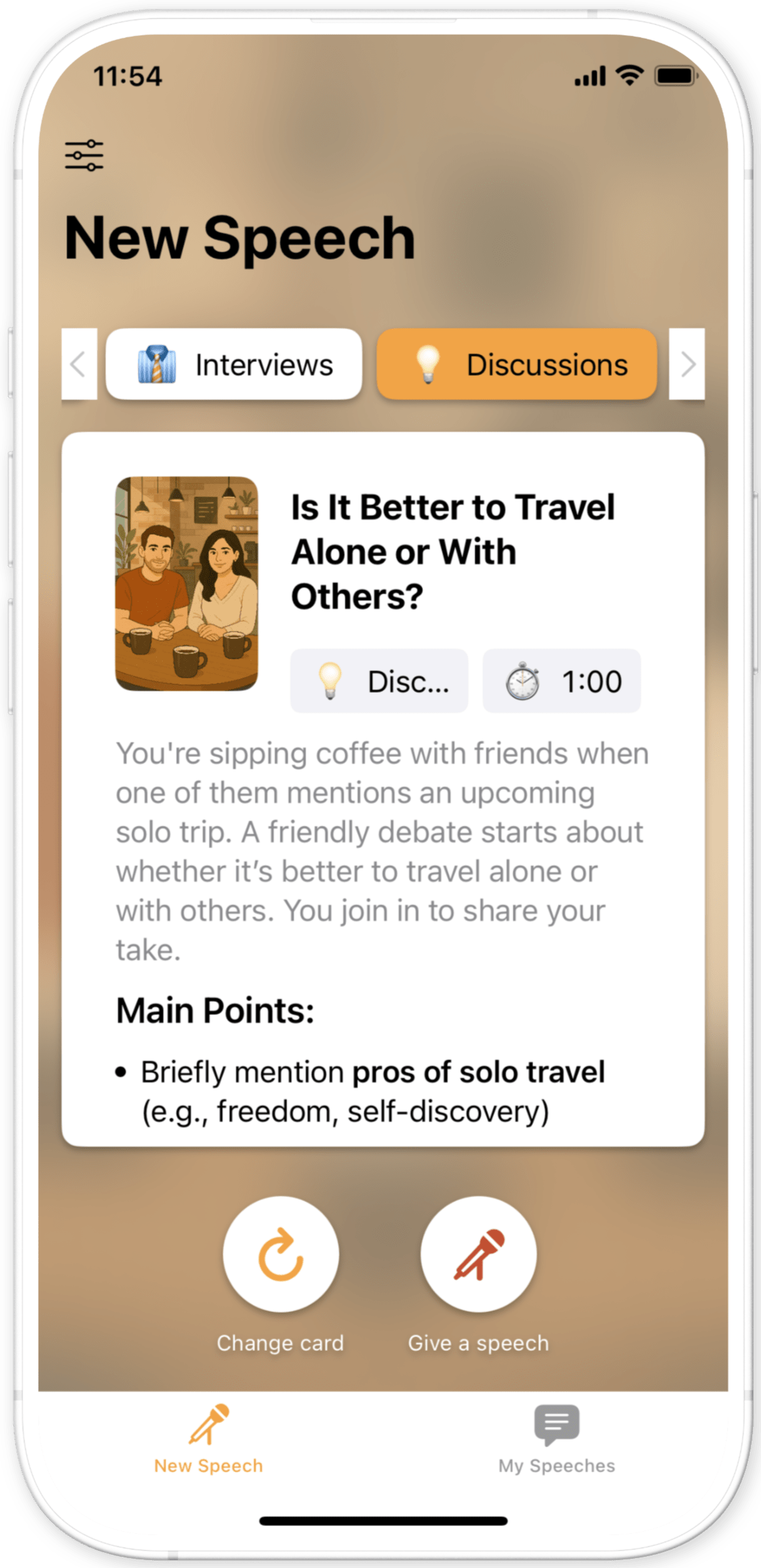
Example of a speech scenario in Babli
5. Practice Impromptu Speaking
Not every speaking opportunity gives you time to prepare. To build this skill, pick a random object around the house or open a news site and choose a headline. Speak about it for one minute without stopping. Focus on keeping a simple structure with a beginning, middle, and end while maintaining steady confidence. This exercise trains quick thinking and adaptability, two qualities that carry over to any real speaking situation.
Key Takeaway
You do not always need a live audience to improve your public speaking skills. By creating your own practice space at home, you can strengthen delivery, build confidence, and prepare for important moments before they arrive. Reading out loud, practicing in front of a mirror, recording yourself, simulating real scenarios with Babli, and training with impromptu speaking will give you steady progress toward clear, memorable, and confident communication.
You should also read:

How to Start a Speech: 7 Powerful Openings That Work Every Time
The first 60 seconds of a speech decide everything. Your audience is judging whether to trust you, whether to listen closely, and whether your message is worth their time. A strong opening captures attention and sets the tone for the rest of your talk. A…
Continue reading...
How to Speak Like a Leader: 5 Communication Habits That Inspire Confidence
Leaders are remembered not just for the decisions they make but for how they communicate them. The ability to speak clearly, confidently, and with authority is what turns ideas into action and teams into movements. Speaking like a leader does not mean copying someone else’s…
Continue reading...
5 Steps to Overcome Public Speaking Anxiety and Speak with Confidence
Public speaking anxiety is one of the most common fears people face. The difference between anxious speakers and confident ones is not the absence of nerves but the ability to manage them. Confidence comes from training your body and mind to respond differently when you…
Continue reading...