
Filler Word Feedback: Speak More Clearly
An occasional “um” is part of natural speech. When “um,” “uh,” “like,” or “you know” appear again and again, listeners can start hearing the hesitation instead of your idea. Babli helps you find those moments.

Why repeated fillers get in the way
Fillers often slip in while you look for a word or move to the next thought. A string of them can make a sentence harder to follow, especially before a name, a number, or an important conclusion. Your point has more impact when people can hear it without the extra noise around it.
Most speakers do not notice every filler while they are speaking. What feels like a brief moment to think may sound like a repeated interruption to someone listening. A pause gives both you and your audience room to breathe, while keeping the focus on the words that matter.
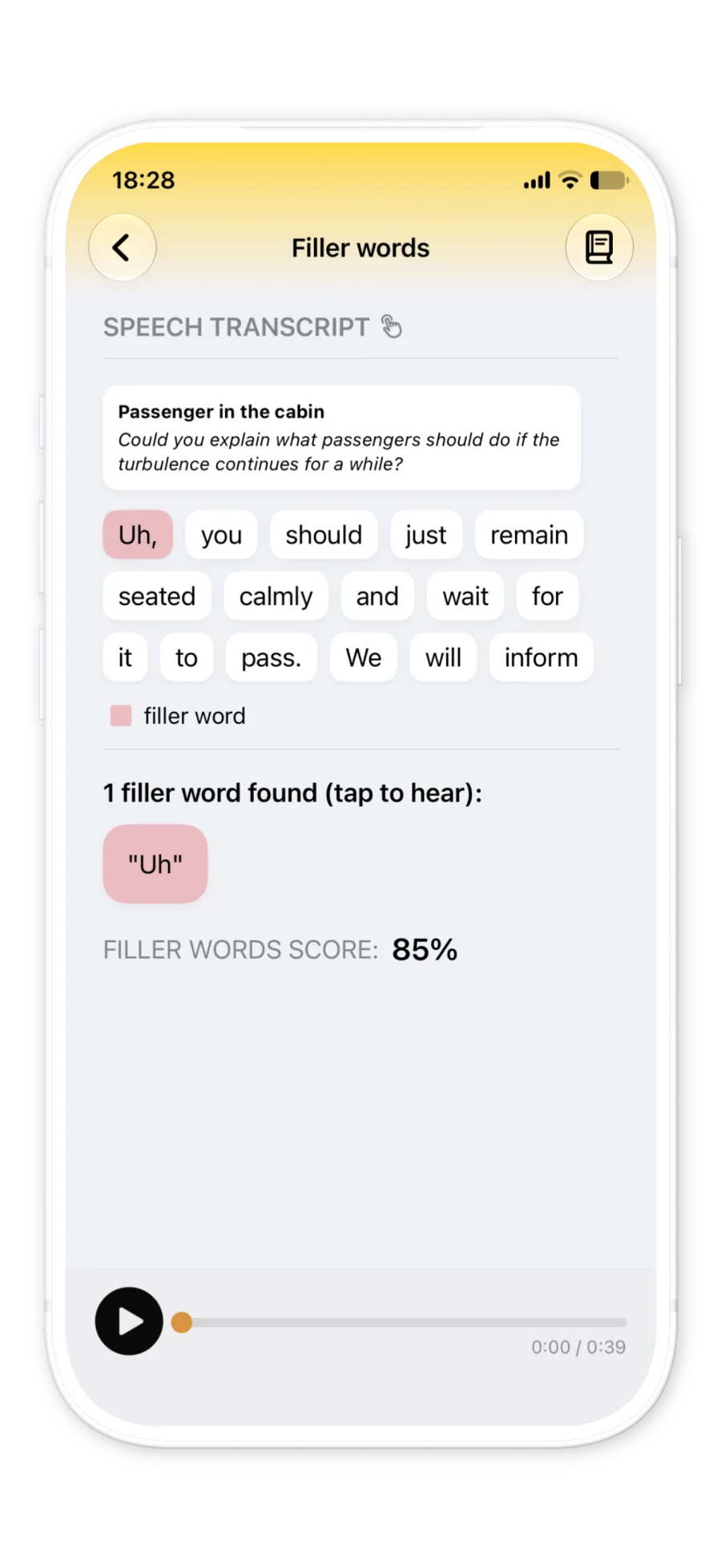
How Babli finds filler words
Babli marks the filler words it detects in your transcript and connects them to the recording. You can hear the exact moments where an “um,” “uh,” or another filler breaks up a sentence, instead of relying on a vague impression of how often it happens.
Seeing those moments together can reveal a pattern: perhaps fillers appear after a question, during transitions, or just before a key fact. The feedback gives you a concrete picture of the habit and where a calmer pause could make your speech sound cleaner.