

Why You Speak Too Fast (and How to Fix It)


Speaking too fast is a common challenge in public speaking. It often happens because of nerves, adrenaline, or being overly familiar with your material. While it can feel natural in the moment, rushing makes it harder for your audience to follow your ideas and can reduce the impact of your message.
Why People Speak Too Fast
Many speakers speed through their words without realizing it. Some common reasons include:
Nerves and adrenaline – Your brain races, and your speech follows.
Fear of losing the audience – You rush to get all your points out before attention fades.
Over-familiarity with the topic – You know it so well that you skim past key details your listeners need time to process.
Lack of self-awareness – Without feedback, you may not notice your pace.
The Downsides of Speaking Too Fast
Rushing can affect both how your message is received and how you are perceived:
Listeners may miss important points.
Your message feels less engaging and harder to remember.
You may appear less confident.
The risk of stumbling or losing your place increases.
How to Slow Down Your Speaking Pace
1. Practice Pausing
Pauses are one of the most powerful tools in public speaking. A one- to two-second pause after each main point gives your audience time to absorb the information and keeps you from racing ahead.
2. Control Your Breathing
Breathing from your diaphragm, rather than shallow chest breathing, naturally slows your rhythm. Take a breath before starting each major point or sentence you want to emphasize.
3. Record and Review Your Speech
Listening back to a recording makes it much easier to spot sections where you rush. You may also notice moments where slowing down could make a stronger impact.
4. Use Visual and Written Feedback
Babli makes this process easier by rewriting your speech transcript and applying color-coded highlights so the pacing feedback is simple to follow:
Red for words spoken too fast
Blue for words spoken too slow
Green for words at the ideal pace
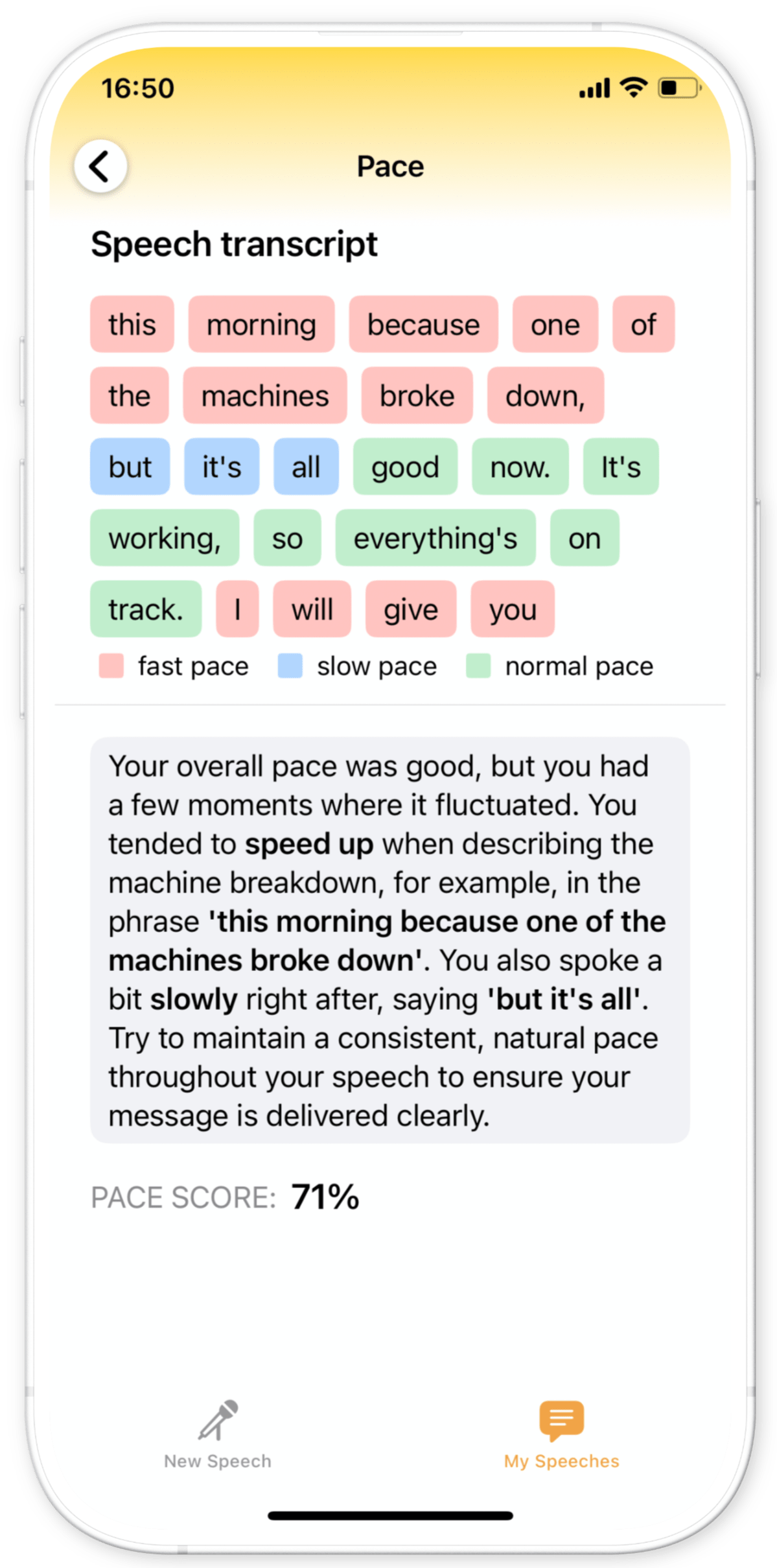
It also includes brief comments like 'too fast at the start' or 'slowed down in the middle' to show both where and when your pace changes during a speech.
5. Script Pauses in Advance
Mark your notes with symbols, such as a slash “/” or line break, to remind yourself where to pause. This turns pacing into a conscious choice instead of something you leave to chance.
Exercises to Improve Speaking Speed
The Metronome Drill – Speak in sync with a slow beat to build a steady pace.
The Five-Word Pause Exercise – Stop briefly after every five words to train yourself to slow down.
Storytelling Practice – Rehearse short stories while varying your pace and inserting pauses for effect.
Key Takeaway
Speaking too fast is often a sign of nerves or habit, but it is entirely fixable. By focusing on pauses, controlling your breathing, and using feedback tools like Babli’s rewritten transcripts with color-coded highlights and pacing comments, you can slow your pace and improve clarity. With consistent practice, you can develop a speaking style that is calm, confident, and engaging.
You should also read:

How to Speak on Virtual Calls: 5 Tips for Confident Zoom Presentations
Virtual calls are now a standard part of professional life. Whether you are leading a meeting, interviewing, or pitching to clients, how you speak on screen directly shapes how people see your confidence and credibility. The challenge is that virtual speaking is different from being…
Continue reading...
How to Speak Like a Leader: 5 Communication Habits That Inspire Confidence
Leaders are remembered not just for the decisions they make but for how they communicate them. The ability to speak clearly, confidently, and with authority is what turns ideas into action and teams into movements. Speaking like a leader does not mean copying someone else’s…
Continue reading...
5 Steps to Overcome Public Speaking Anxiety and Speak with Confidence
Public speaking anxiety is one of the most common fears people face. The difference between anxious speakers and confident ones is not the absence of nerves but the ability to manage them. Confidence comes from training your body and mind to respond differently when you…
Continue reading...